If you’re a Minnesota landowner staring at an overgrown pasture, a tangled woodland edge, or acres of invasive buckthorn (Rhamnus cathartica), you’ve probably wondered about the best way to reclaim your property. When comparing forestry mulching vs. land clearing, Minnesota property owners often discover these aren’t just two names for the same thing — they’re fundamentally different approaches with very different outcomes.
Let’s break down what sets these methods apart, why forestry mulching has become the preferred choice for savvy farm owners and property owners across Scott County and surrounding areas, and which option makes the most sense for your land management goals.
Understanding Traditional Land Clearing
Traditional land clearing is exactly what it sounds like — removing everything from a piece of property. This typically involves heavy equipment like bulldozers, excavators, and dump trucks working together to push over trees, rip out stumps, and haul away debris.
While this approach certainly gets the job done, it comes with some significant drawbacks.
The Downsides of Conventional Clearing
Soil disturbance is perhaps the biggest concern. When you bring in excavation equipment to push and pile vegetation, you’re also stripping away topsoil, disrupting root systems that hold the earth in place, and compacting the ground with heavy machinery. For Minnesota property owners dealing with our notoriously wet spring conditions, this creates a recipe for erosion problems.
Traditional clearing also leaves you with massive brush piles that need burning (weather and permits allowing) or hauling off-site — both of which add time and expense to your project.
Then there’s the visual impact. A conventionally cleared property often looks like a construction zone for months afterward, with exposed dirt, tire ruts, and that raw, scarred appearance that takes years to fully recover.
What Makes Forestry Mulching Different?
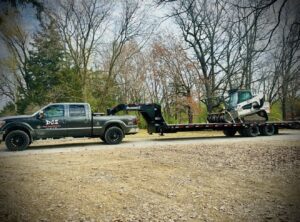
Forestry mulching takes a completely different approach. Instead of removing vegetation from your property, a forestry mulcher grinds trees, brush, and stumps right where they stand, converting them into a layer of organic mulch that stays on the ground.
Here in the Prior Lake, Minnesota area, we see this method working exceptionally well across diverse property types — from hobby farms to hunting land to residential acreage.
How the Process Works
A forestry mulching machine is essentially a powerful rotary drum with carbide teeth, mounted on a tracked carrier. The operator drives directly into the vegetation, grinding everything from small saplings to trees up to 8–10 inches in diameter into chips. The mulched material falls directly onto the soil surface.
This single-machine approach means:
- No hauling debris off-site
- No burning brush piles
- No secondary equipment needed
- Minimal ground disturbance
- Completion in a fraction of the time
Why Minnesota Landowners Are Choosing Forestry Mulching
When weighing forestry mulching vs. land clearing, Minnesota’s unique conditions make mulching the clear winner for most applications. Here’s why local property owners are making the switch.
Protecting Minnesota’s Challenging Soils
Anyone who’s tried to work the land during a Minnesota spring knows how quickly saturated soils can turn into a muddy mess. The clay-heavy soils common throughout Scott County and the greater Twin Cities metro are especially prone to compaction and rutting.
Forestry mulching equipment, particularly track-mounted machines, distributes weight more evenly and can often work in conditions that would sideline traditional clearing equipment. Plus, the mulch layer left behind actually helps absorb moisture and prevent erosion during those inevitable spring thaws.
Battling Invasive Species
Minnesota landowners are fighting an ongoing battle against invasive species like common buckthorn, glossy buckthorn (Frangula alnus), and Eurasian honeysuckle (Lonicera tatarica) — along with aggressive native thicket-formers like prickly ash (Zanthoxylum americanum), which is a Minnesota native but spreads aggressively and crowds out desirable plants. Left unchecked, these plants crowd out desirable species like red oak (Quercus rubra), sugar maple (Acer saccharum), and native understory plants.
Forestry mulching is incredibly effective for invasive species management. The process can target problem vegetation while leaving desirable trees standing — something traditional land clearing simply can’t accomplish.
Cost-Effective Land Management
Because forestry mulching uses a single machine and leaves material on-site, it’s typically more affordable than conventional clearing methods that require multiple pieces of equipment, trucking, and disposal fees. For farm owners managing fence lines, pasture edges, or CRP land, this cost efficiency makes regular maintenance actually achievable.
Common Applications for Forestry Mulching
Property owners throughout the surrounding areas use forestry mulching services for:
- Pasture reclamation – Clearing overgrown fields for grazing or hay production
- Trail and path creation – Opening up recreational access through wooded areas
- Fence line clearing – Maintaining clear boundaries without soil disturbance
- Hunting plot development – Creating food plots and shooting lanes
- Fire break establishment – Reducing fuel loads around structures
- Lot clearing – Preparing rural building sites while preserving select trees
- Drainage improvement – Opening up areas to improve water flow patterns
When Traditional Clearing Makes Sense
To be fair, there are situations where traditional land clearing or excavation work is the better choice. If you’re preparing a site for construction that requires grading, installing a septic system, or need to remove very large trees, you may need conventional equipment.
The good news? Many projects benefit from a combined approach — using forestry mulching for the bulk of vegetation removal and bringing in excavation equipment only where absolutely necessary.
FAQ: Common Questions About Forestry Mulching
Do I need a permit for forestry mulching on my own property?
In most cases, Minnesota landowners don’t need permits for forestry mulching on their own residential or agricultural property. However, there are important exceptions. If your land is near wetlands, within shoreland zones, or in certain zoning districts, you may need to check with your local planning department. Scott County and individual municipalities like Prior Lake have specific regulations, so it’s always smart to make a quick call to your local government office before starting work. A reputable forestry mulching contractor can also help guide you through any requirements.
How long does forestry mulching take?
Most residential projects are completed in a single day. Larger agricultural or commercial properties may take two to three days depending on vegetation density and terrain.
What happens to the mulch left behind?
The wood chips decompose naturally over time, returning nutrients to the soil. Most property owners find the mulch layer breaks down significantly within one to two growing seasons.
About the Author
Jake is the owner and lead operator at DCS Brush Control in Prior Lake, MN. He has spent over four years clearing land across Scott County, Carver County, and the Twin Cities south metro — from half-acre residential lots to 50-acre rural properties. When he’s not on a job site, he’s walking properties and giving free estimates to landowners who aren’t sure where to start.
Ready to Reclaim Your Minnesota Property?
If you’ve been putting off that overgrown back forty, those encroaching fence lines, or that buckthorn-infested woodlot, there’s never been a better time to take action. Forestry mulching offers Minnesota landowners a faster, more affordable, and more environmentally responsible way to manage their property.
DCS Brush Control serves property owners throughout Prior Lake, Scott County, and the surrounding Minnesota communities. Whether you’re a farm owner looking to reclaim productive acreage or a residential property owner wanting to clean up your land, we’re here to help.
Contact DCS Brush Control today for a free estimate on your forestry mulching project. Call Jake at 612-554-0795 or reach out online — let’s talk about your property, your goals, and how we can help you get your land working for you again.