If you own property in Minnesota — whether it’s a wooded lot, a rural acreage, a lakefront cabin, or a farm — there’s a good chance you’ve got buckthorn. It spreads fast, chokes out everything else, and doesn’t go away on its own.
Here’s what you need to know about buckthorn removal in Minnesota, and what actually works.
What Is Buckthorn?
Common buckthorn (Rhamnus cathartica) and glossy buckthorn (Frangula alnus) are invasive shrubs introduced from Europe and Asia in the 1800s. The Minnesota Department of Agriculture classifies both as restricted noxious weeds — meaning it’s illegal to sell or propagate them in the state, and transporting them is regulated. You’re not legally required to remove buckthorn that’s already on your land, but the state strongly encourages control because it spreads so aggressively.
How to Identify Buckthorn
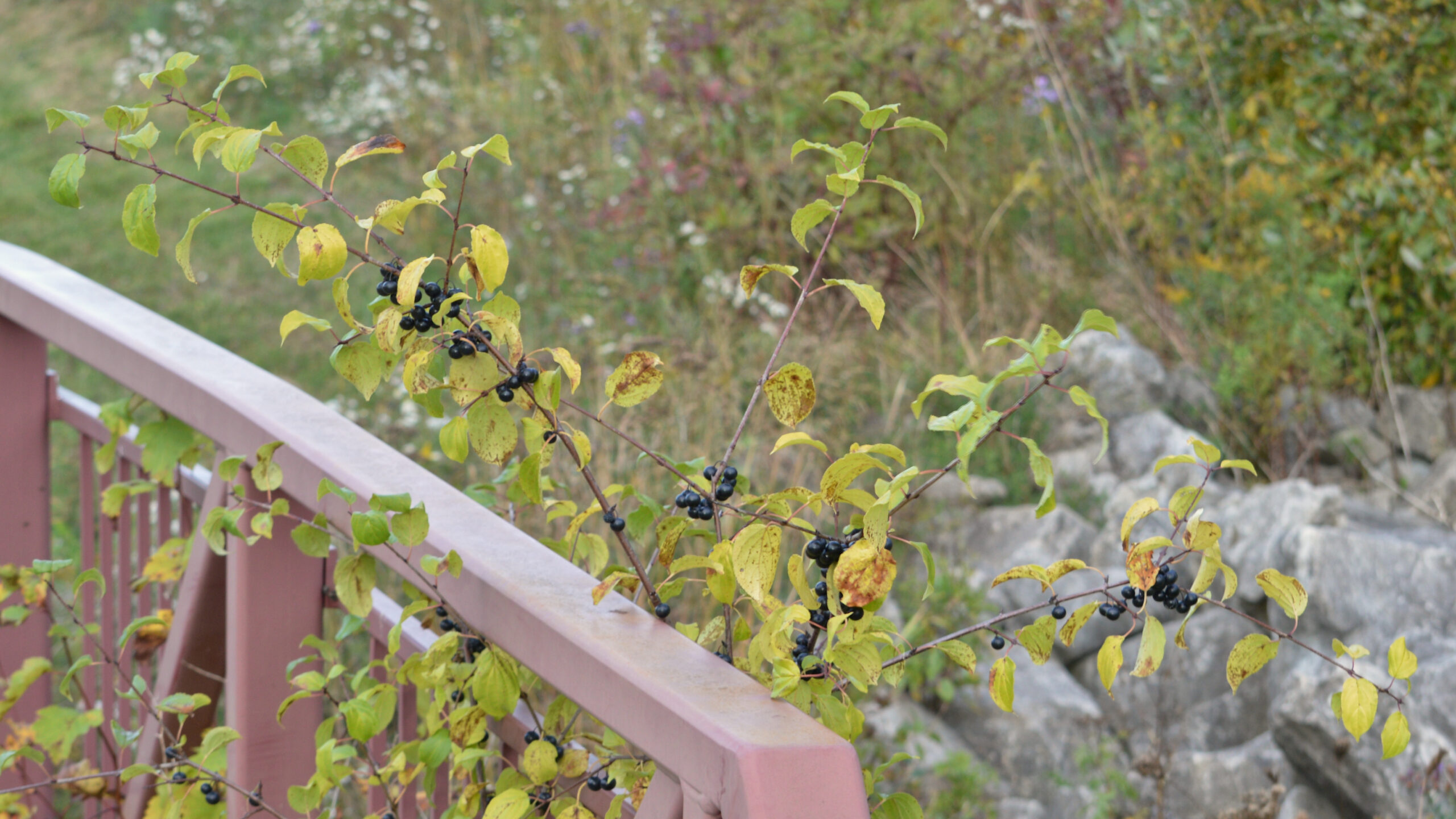
- Thorny tips on branches — the telltale sign of common buckthorn
- Leaves that stay green late into fall, long after native plants have dropped theirs
- Dark purple-black berries ripening in late summer, spread by birds
- Orange-tinted inner bark — scrape a small branch to see it
- Glossy buckthorn lacks thorns but has shiny leaves with prominent veins
Why Buckthorn Is Such a Problem
It shades out natives. Dense canopy prevents wildflowers, seedlings, and native shrubs from establishing.
It alters soil chemistry to favor its own regrowth over native species.
It spreads aggressively — one mature plant produces thousands of berries per year. A light infestation becomes a full takeover in a few years.
It’s hard to kill. Cut without treating the stump and it comes back as multiple stems.
Buckthorn Removal Methods
Cut and Treat
Cut at the base and immediately treat the stump with triclopyr herbicide. Timing is critical — treatment must happen within minutes of the cut.
Foliar Treatment
Late fall foliar herbicide (after native plants drop their leaves, while buckthorn is still green) is highly targeted and effective.
Mechanical Removal
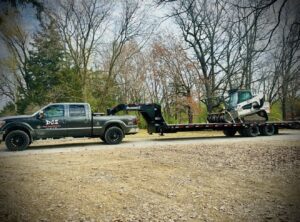
For large infestations, forestry mulching is the most efficient approach — grinding buckthorn into a mulch layer on-site. No burn piles, no hauling. Combine with follow-up herbicide for best results.
Follow-Up Is Critical
Buckthorn seeds remain viable in soil for years. Overseeding with native plants after removal is what separates long-term success from having to start over.
Best Time for Removal in Minnesota
- Late fall (Oct–Nov) — ideal for cut-and-treat and foliar herbicide
- Winter — great for mechanical removal; frozen ground protects soil
- Spring/summer — mechanical clearing works, but plan for follow-up
FAQ: Buckthorn Removal in Minnesota
Q: How do I get rid of buckthorn for good?
There’s no one-and-done fix. The reliable approach is to cut and immediately treat the stumps with triclopyr (or use a late-fall foliar treatment), then follow up. Buckthorn seeds stay viable in the soil for years, so overseeding with natives and spot-treating regrowth is what makes removal stick.
Q: Is it illegal to have buckthorn on my property in Minnesota?
No. Buckthorn is a restricted noxious weed, which means you can’t sell or propagate it — but you’re not legally required to remove what’s already growing on your land. The state strongly encourages control, though, because it spreads so quickly.
Q: When is the best time to remove buckthorn?
Late fall (roughly October–November) is ideal for cut-and-treat and foliar herbicide, since buckthorn holds its green leaves after natives drop theirs. Winter is great for mechanical removal on frozen ground. Spring and summer clearing works too, but plan for follow-up.
Q: Can you just mulch buckthorn instead of using herbicide?
Forestry mulching is the fastest way to knock down a big infestation, but cutting or mulching alone usually triggers vigorous regrowth from the stump and roots. Pairing mechanical removal with follow-up herbicide treatment is what delivers lasting results.
About the Author
Jake is the owner and lead operator at DCS Brush Control in Prior Lake, MN. He has spent over four years clearing land across Scott County, Carver County, and the Twin Cities south metro — from half-acre residential lots to 50-acre rural properties. When he’s not on a job site, he’s walking properties and giving free estimates to landowners who aren’t sure where to start.
DCS Brush Control — Buckthorn Removal in the Twin Cities Area
DCS Brush Control specializes in large-scale invasive species removal in Prior Lake, Lakeville, Burnsville, Apple Valley, Savage, and throughout Dakota and Scott Counties. We use forestry mulching equipment — no burn piles, no hauling, no mess.
Contact DCS Brush Control for a free estimate. Call Jake at 612-554-0795 or reach out online — we serve the greater Minneapolis–Saint Paul metro and surrounding lake country.